


Diploma in Electronics and Communication Engineering
A practice-oriented 3-year polytechnic engineering programme providing hands-on training in analog and digital electronic circuits, microcontroller firmware, telecommunications infrastructure, PCB fabrication, and hardware testing.
Quick Programme Facts
Programme Overview
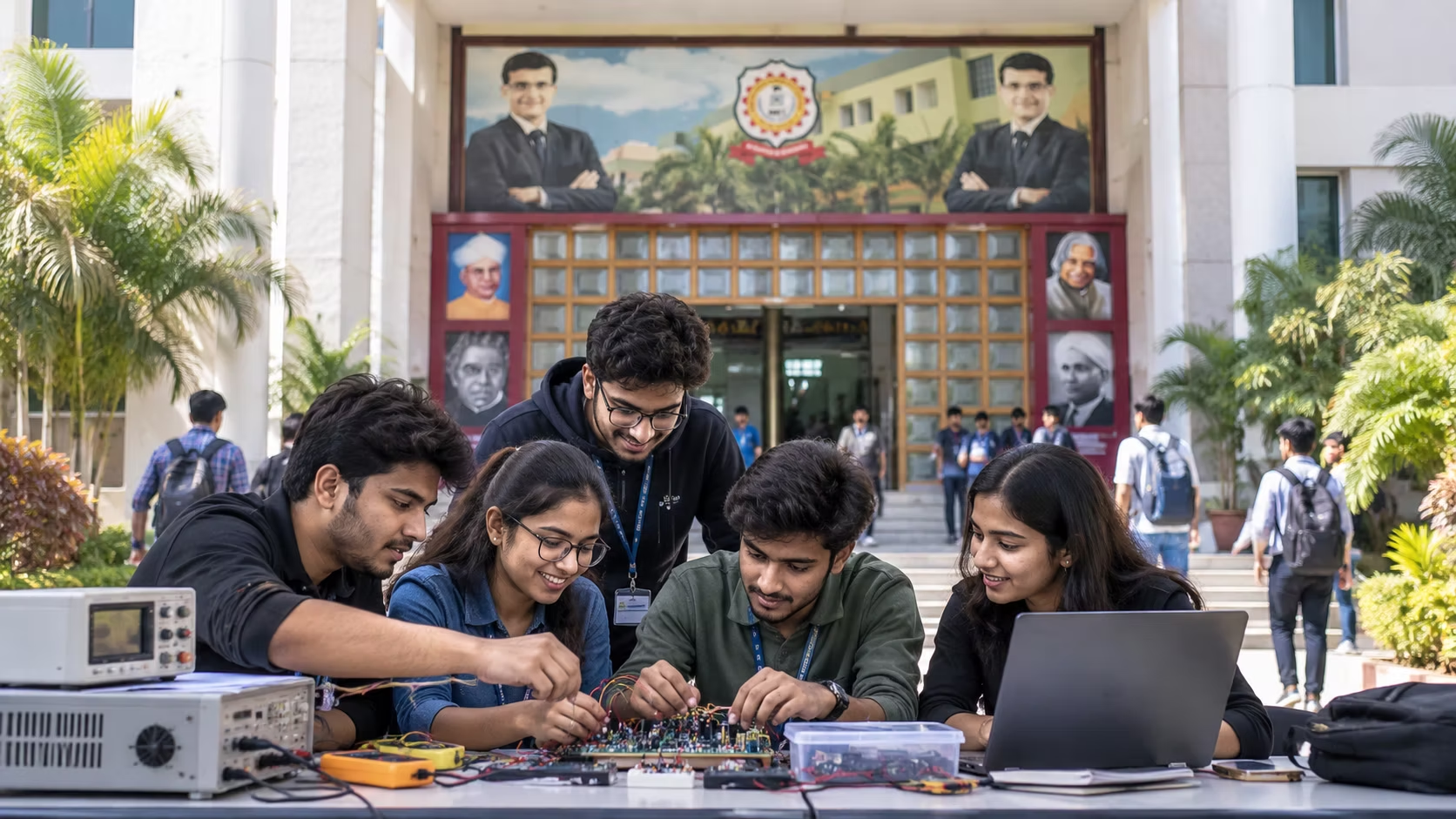
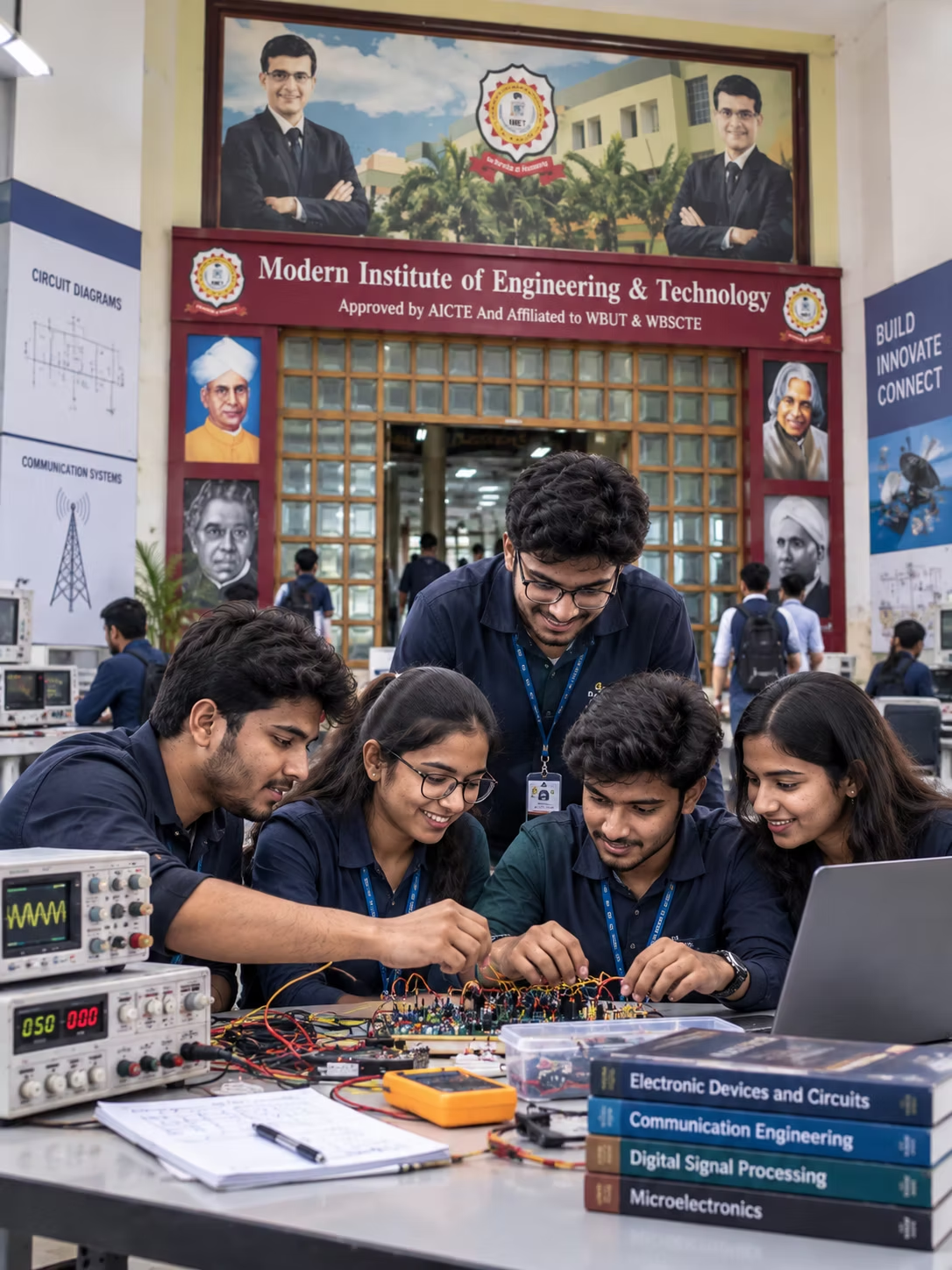
The 3-Year Polytechnic Diploma in Electronics and Communication Engineering at Modern Institute of Engineering & Technology (MIET), Bandel, Hooghly, prepares skilled electronics technicians, communication supervisors, and hardware testing specialists. Approved by AICTE, New Delhi, and affiliated with the West Bengal State Council of Technical and Vocational Education and Skill Development (WBSCTVESD), the programme balances theoretical circuit fundamentals with rigorous bench testing on oscilloscopes, signal generators, microcontroller trainers, and optical communication kits.
Three-year polytechnic engineering diploma structured across 6 semesters in strict compliance with the official WBSCTVESD curriculum.
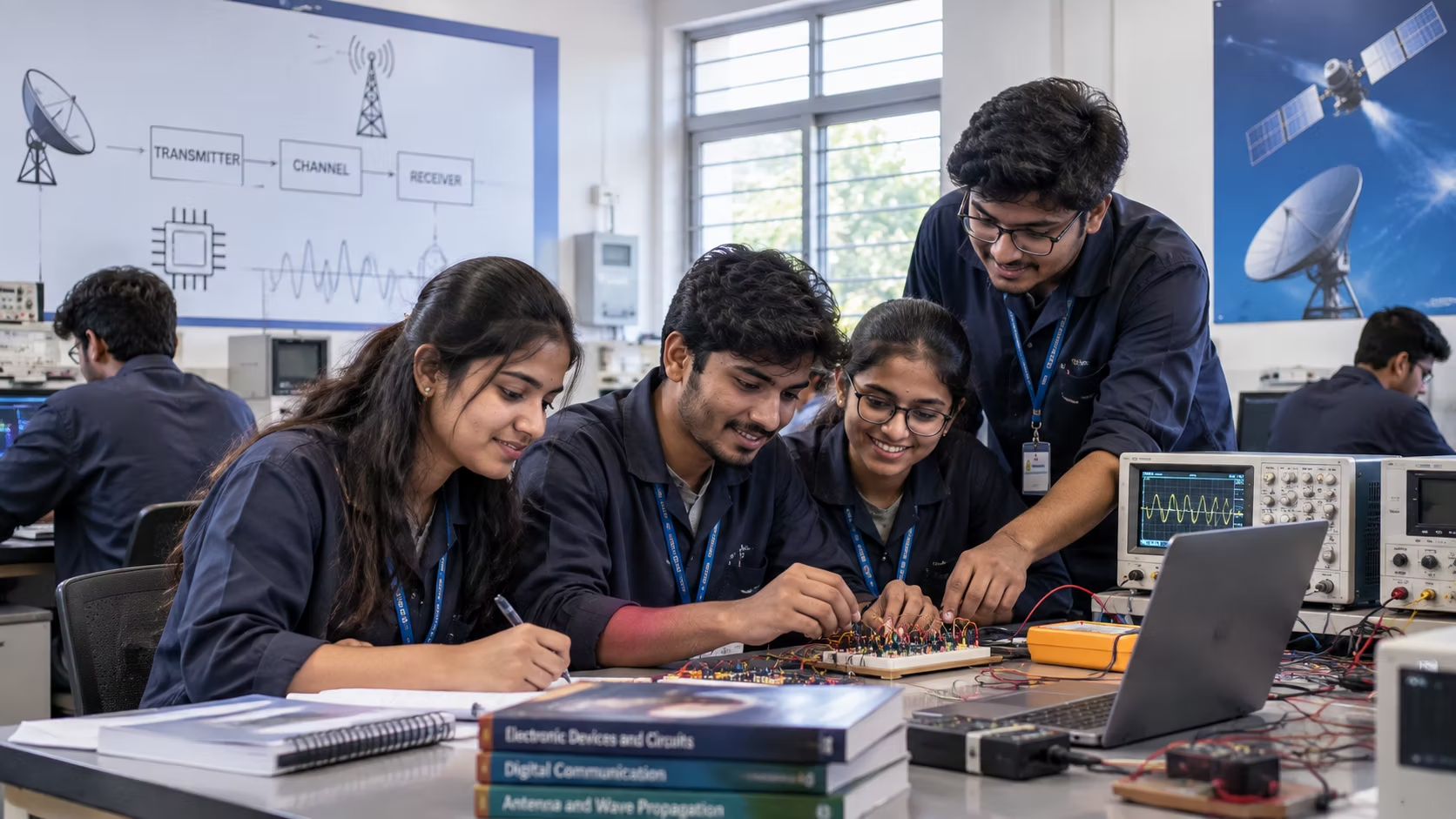
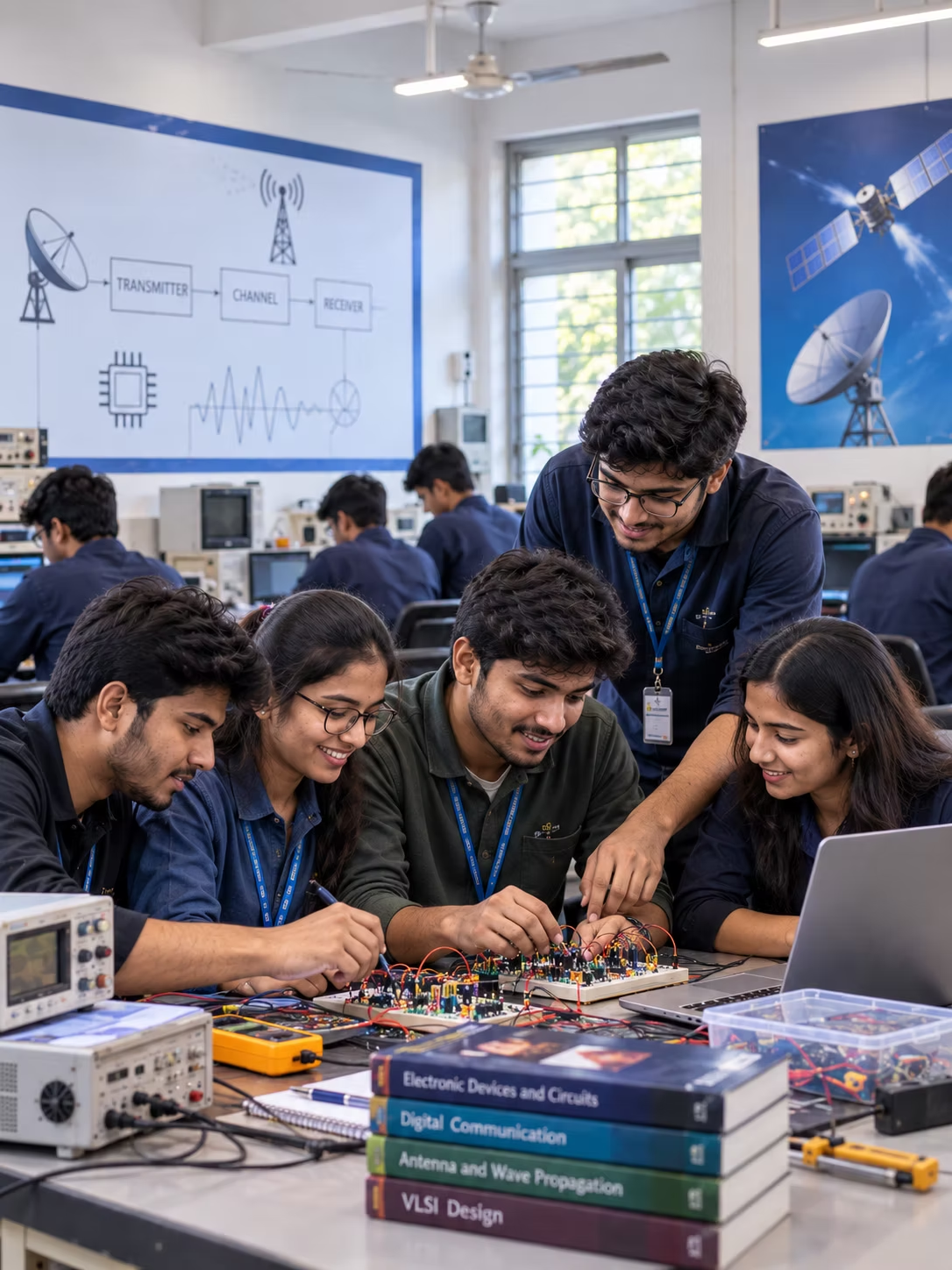
Extensive laboratory hours on digital storage oscilloscopes (DSOs), regulated DC power supplies, function generators, and PCB prototyping benches.
Comprehensive practical training across analog circuits, digital logic design, 8051/AVR microcontrollers, and modern wireless communication systems.
Direct academic pathway for higher education: Diploma holders are eligible for direct Lateral Entry into 2nd Year (3rd Semester) B.Tech ECE via JELET.
Why Study Diploma in Electronics and Communication Engineering at MIET?
From cellular telecommunications and industrial automation to defense electronics and railway signaling, qualified electronics technicians are essential to modern technological infrastructure. MIET Bandel combines modern testing instrumentation, experienced faculty mentors, and comprehensive career development.
Modern electronics and communication laboratories equipped with digital storage oscilloscopes (DSOs), precision multimeters, RF signal generators, and spectrum analyzers.
Dedicated microcontroller and embedded systems bay featuring 8051 and AVR trainer kits, ADC/DAC modules, and sensor interfacing boards.
Hands-on training in PCB schematic drafting, artwork creation, copper etching, component soldering, and hardware fault diagnosis.
Institutional Book Bank facility providing every polytechnic student with a full set of core semester textbooks for the entire academic term.
Specialized coaching and academic mentorship for JELET lateral entry into 2nd year B.Tech as well as competitive examinations like RRB JE (Signal & Telecom) and state JE recruitments.
Programme Highlights
Differentiating academic modules designed to build high-demand technological competencies.
Analog & Digital Electronics
Testing operational amplifiers, semiconductor diodes, transistors, logic gates, flip-flops, and multivibrator circuits.
Microcontrollers & Embedded Systems
Assembly and C programming for 8051 and AVR microcontrollers with display units, motor drives, and sensor interfacing.
Communication Engineering
Practical study of AM/FM modulators, transmission lines, digital modulation schemes, and optical fiber links.
PCB Prototyping & Soldering
Designing circuit schematics, PCB layout routing, component population, precision soldering, and hardware debugging.
Eligibility Criteria
Candidates seeking admission to the 3-Year Polytechnic Diploma in Electronics and Communication Engineering must comply with statutory benchmarks established by WBSCTVESD and AICTE.
Lateral Entry & Verification Notes
- •Lateral Entry (VOCLET): Candidates who have passed 10+2 (Vocational / Technical) or completed a 2-Year ITI in relevant electronics, radio & TV, electrician, or allied trades are eligible for direct admission into 2nd Year (3rd Semester) via VOCLET counseling.
- •Mandatory document verification: 10th mark sheet, admit card, rank card, domicile certificate, and medical fitness certificate are required during on-campus physical verification.
Admission Procedure & Guidelines
Admissions are administered through centralized online counseling conducted by WBSCTVESD (JEXPO), alongside institutional management quota seats.
Appear for the JEXPO polytechnic entrance examination conducted by WBSCTVESD and secure an eligible merit rank.
Register on the WBSCTVESD centralized online counseling portal during the choice-filling schedule.
Select Modern Institute of Engineering & Technology (MIET) - Diploma in Electronics and Communication Engineering as your preferred institution and branch.
Upon allotment, report to the MIET Bandel admission cell with required original certificates, passport photographs, and allotment letter for enrollment.
Programme Fee Structure & Semester Schedule
Official institutional fee breakdown for Academic Session 2026-27 approved for Polytechnic Diploma. All semester fee schedules are transparently published without hidden charges.
3-Year Diploma & Lateral Entry Fee Schedule
| Discipline | Total Fees | Admission + 1st Sem | 2nd Sem | 3rd Sem | 4th Sem | 5th Sem | 6th Sem |
|---|---|---|---|---|---|---|---|
| 1st Year Regular Admissions (4-Year Programme) | |||||||
Mechanical EngineeringDME, 1ST 1st Year Admission | ₹1,00,000 | ₹45,000 | ₹11,000 | ₹11,000 | ₹11,000 | ₹11,000 | ₹11,000 |
Electrical EngineeringDEE, 1ST 1st Year Admission | ₹1,00,000 | ₹45,000 | ₹11,000 | ₹11,000 | ₹11,000 | ₹11,000 | ₹11,000 |
Civil EngineeringDCE, 1ST 1st Year Admission | ₹90,000 | ₹35,000 | ₹11,000 | ₹11,000 | ₹11,000 | ₹11,000 | ₹11,000 |
Computer Science & TechnologyDCST, 1ST 1st Year Admission | ₹85,000 | ₹30,000 | ₹11,000 | ₹11,000 | ₹11,000 | ₹11,000 | ₹11,000 |
Electronics & Communication EngineeringDECE, 1STThis Course 1st Year Admission | ₹75,000 | ₹20,000 | ₹11,000 | ₹11,000 | ₹11,000 | ₹11,000 | ₹11,000 |
| Lateral Entry Admissions (VOCLET — Direct 2nd Year Admission) | |||||||
Mechanical EngineeringDME, VOCLET Lateral Admission (VOCLET) | ₹85,000 | ₹40,000 Initial Entry Fee | — | — | ₹15,000 | ₹15,000 | ₹15,000 |
Electrical EngineeringDEE, VOCLET Lateral Admission (VOCLET) | ₹85,000 | ₹40,000 Initial Entry Fee | — | — | ₹15,000 | ₹15,000 | ₹15,000 |
Civil EngineeringDCE, VOCLET Lateral Admission (VOCLET) | ₹80,000 | ₹35,000 Initial Entry Fee | — | — | ₹15,000 | ₹15,000 | ₹15,000 |
Computer Science & TechnologyDCST, VOCLET Lateral Admission (VOCLET) | ₹70,000 | ₹30,000 Initial Entry Fee | — | — | ₹15,000 | ₹15,000 | ₹15,000 |
Electronics & Communication EngineeringDECE, VOCLETThis Course Lateral Admission (VOCLET) | ₹65,000 | ₹25,000 Initial Entry Fee | — | — | ₹15,000 | ₹15,000 | ₹15,000 |
Curriculum & What You Will Study
Three-year polytechnic engineering curriculum prescribed by WBSCTVESD, balancing classroom fundamentals with intensive workshop practice and laboratory training.
Semester 1
Applied sciences, basic mathematics, and introductory engineering workshop practices.
Core Subjects & Laboratories (7 modules)
Core Practical Competency Domains
Foundational domains mastered throughout the four years of engineering study.
Laboratories & Practical Electronics Training
Our polytechnic electronics laboratories provide extensive hands-on experimentation with circuit trainers, precision testing instruments, and microcontroller hardware development kits.
Analog Electronics Lab: Transistor characteristic test benches (CE, CB, CC), push-pull power amplifiers, regulated DC power supply units, and dual-trace digital storage oscilloscopes (DSOs).
Digital Electronics & Logic Design Lab: Digital IC trainer units, TTL/CMOS logic gates, combinational adder/subtractor modules, flip-flop trainers, shift registers, and counter circuit benches.
Microprocessor & Microcontroller Lab: 8085 microprocessor evaluation kits, 8051 and AVR microcontroller trainer platforms, ADC/DAC interface boards, stepper motor drivers, and 7-segment display modules.
Communication Engineering Lab: AM/FM modulation and demodulation kits, superheterodyne receiver trainers, optical fiber transmission links, RF signal generators, and spectrum analyzers.
PCB Prototyping & Electronic Workshop Bay: Complete PCB design and fabrication facilities including artwork drafting, copper-clad etching, high-speed drilling, component mounting, temperature-controlled soldering, and desoldering stations.
Student Projects & Circuit Prototyping
Diploma scholars assemble, wire, and test functional hardware circuits addressing practical communication, automation, and consumer electronics applications.
Microcontroller-Based Temperature Monitoring System: 8051/AVR-controlled digital thermometer using LM35 sensor with LCD readout and high-temperature buzzer alarm.
Compact FM Audio Transmitter & Tuner: Compact wireless audio transmitter module engineered with discrete RF transistors, LC resonant tank circuit, and telescopic antenna.
Automatic Street Light Controller with Relay Interface: LDR-based ambient light intensity sensing circuit with operational amplifier comparator driving high-power relay switching.
Infrared (IR) Remote Control Multi-Appliance Switch: Infrared transmitter and receiver circuit utilizing 38kHz demodulation IC to trigger solid-state relay boards.
Digital Stop-Watch & Object Counter: Multi-stage digital counter circuit built with 7490 BCD decade counters, 7447 decoder drivers, and seven-segment displays.
Skills Students Develop
A balanced mix of hard technical capabilities, engineering analytics, and workplace professionalism.
Technical Proficiencies
- Analog and digital electronic circuit diagnosis and fault isolation
- Microcontroller firmware development (8051/AVR) in Assembly and Embedded C
- Precision handling of Digital Storage Oscilloscopes (DSOs), multimeters, and function generators
- Schematic drafting, PCB layout routing, copper etching, and component soldering
- Communication signal modulation, demodulation, and RF tuning
- Optical fiber link setup, connectorization, and optical power measurement
- Surface-mount (SMD) and through-hole component soldering and desoldering
Professional & Workplace
- Electronic laboratory safety protocols and Electrostatic Discharge (ESD) protection procedures
- Component specification analysis, tolerance estimation, and technical datasheet interpretation
- Equipment maintenance logging and structured technical troubleshooting documentation
- Collaborative teamwork on circuit prototyping, bench testing, and hardware builds
- Technical project report drafting and structured viva-voce presentations
Analytical & Engineering
- Kirchhoff's laws, Thévenin's theorem, and circuit loop analysis
- Frequency response, bandwidth, harmonic distortion, and signal-to-noise ratio calculation
- Logic truth tables, Boolean minimization, Karnaugh maps, and timing diagrams
- DC bias stability, thermal runaway prevention, and transistor load-line evaluation
Career Opportunities & Pathways
Electronics and communication diploma technicians work across telecommunications, consumer electronics assembly, defense equipment manufacturing, railways, and industrial automation.
Key Job Profiles & Designations
Recruiting Industry Sectors
- •Telecommunication Service Providers (BSNL, Airtel, Jio) & Tower Infrastructure
- •Indian Railways (RRB Junior Engineer - Signal & Telecommunication)
- •Public Sector Undertakings (BEL, BHEL, DRDO, ISRO, ECIL, SAIL)
- •Consumer Electronics & Home Appliance Manufacturing Enterprises
- •Printed Circuit Board (PCB) Assembly & Surface Mount Technology (SMT) Plants
- •Automotive Electronics & Electric Vehicle (EV) Subsystem Assembly
Higher Studies & Competitive Exams
- •Direct Lateral Entry into 2nd Year (3rd Semester) B.Tech ECE via JELET
- •Post-Diploma Advanced Certification in Embedded Systems / Industrial IoT
- •Associate Member of the Institution of Engineers (AMIE) Technical Qualification
* Recruitment selection depends on academic marks, practical trade skill assessments, and personal interviews. MIET coordinates on-campus recruitment and off-campus placement assistance.
Industry Readiness & Employability Grooming
MIET conducts targeted career grooming modules to prepare polytechnic students for electronics manufacturing, telecom operations, technical interviews, and competitive examinations.
Industrial Visits: Guided field tours to regional telecommunication installations, broadcasting stations, and electronic assembly units.
Hardware Soldering & PCB Sprints: Rigorous bench drills mastering through-hole and surface-mount soldering according to industrial cleanliness standards.
JELET & Technical Competitive Coaching: Dedicated classes covering engineering mathematics, basic electronics, and circuit theory to prepare diploma students for B.Tech lateral entry and RRB JE examinations.
Electronics Safety & ESD Standards: Comprehensive training in electrostatic discharge (ESD) safe handling, electrical grounding, and lab hazard prevention.
Academic Resources & Infrastructure
Polytechnic electronics scholars enjoy unrestricted access to MIET's testing laboratories, microcontroller bays, Book Bank facilities, and campus amenities.
Technical Innovation & Hardware Prototyping
MIET fosters an active technical culture encouraging polytechnic electronics students to participate in circuit design challenges, prototype exhibitions, and technical workshops.
IoT & Embedded Prototyping Club: Student-driven projects focusing on sensor interfacing, automated switching, and microcontroller firmware development.
Circuit Troubleshooting & Soldering Clinics: Regular practical workshops mastering precision component soldering, PCB etching, and electronic fault diagnosis.
Annual Technical Festival (Tech-Fiesta): Inter-college competitions including circuit design challenges, hardware debugging sprints, and electronic project displays.
E-Waste Recycling & Component Testing: Practical sessions on testing, harvesting, and repurposing functional semiconductor devices from decommissioned electronic units.
Alumni Success Stories & Placements
Our polytechnic electronics graduates secure placements in leading technology and telecommunications enterprises or advance into prestigious B.Tech programmes through JELET.
“The hands-on communication and oscilloscope labs at MIET provided direct real-world preparation for telecom network maintenance and optical fiber testing.”

Sourav Paul
Junior Field Service Engineer • Regional Telecom & Network Infrastructure
2025“MIET's diploma training provided a rock-solid foundation in analog devices, digital circuits, and microcontrollers, which helped me achieve a high rank in JELET.”
Anirban Das
B.Tech ECE Scholar (JELET Lateral Entry) • Maulana Abul Kalam Azad University of Technology
2024“From PCB soldering to signal generator calibration, the practical bench drills at MIET gave me the confidence to handle industrial electronics quality control.”
Pooja Karmakar
Electronic Hardware Quality Technician • Consumer Electronics Manufacturing Unit
2024Institutional Transparency & Curriculum Standards
Verified with WBSCTVESD Council RegulationsFrequently Asked Questions: Diploma in Electronics and Communication Engineering
Find clear answers regarding MIET College admissions, academic approach, campus facilities, and research initiatives.
What is the duration, statutory approval, and council affiliation of the Diploma in Electronics and Communication Engineering?
Can diploma holders join 2nd Year B.Tech in Electronics & Communication Engineering directly?
What are the minimum eligibility criteria for 1st Year admission through JEXPO?
Is lateral entry into the 2nd Year (3rd Semester) supported for ITI and 10+2 vocational candidates?
What career and placement opportunities are available for polytechnic electronics diploma graduates?
Begin Your Engineering Journey in Diploma in Electronics and Communication Engineering
Secure your seat at Modern Institute of Engineering & Technology (MIET). Approved by AICTE, affiliated with WBSCTVESD (West Bengal State Council) & AICTE, and located conveniently in Bandel, Hooghly.